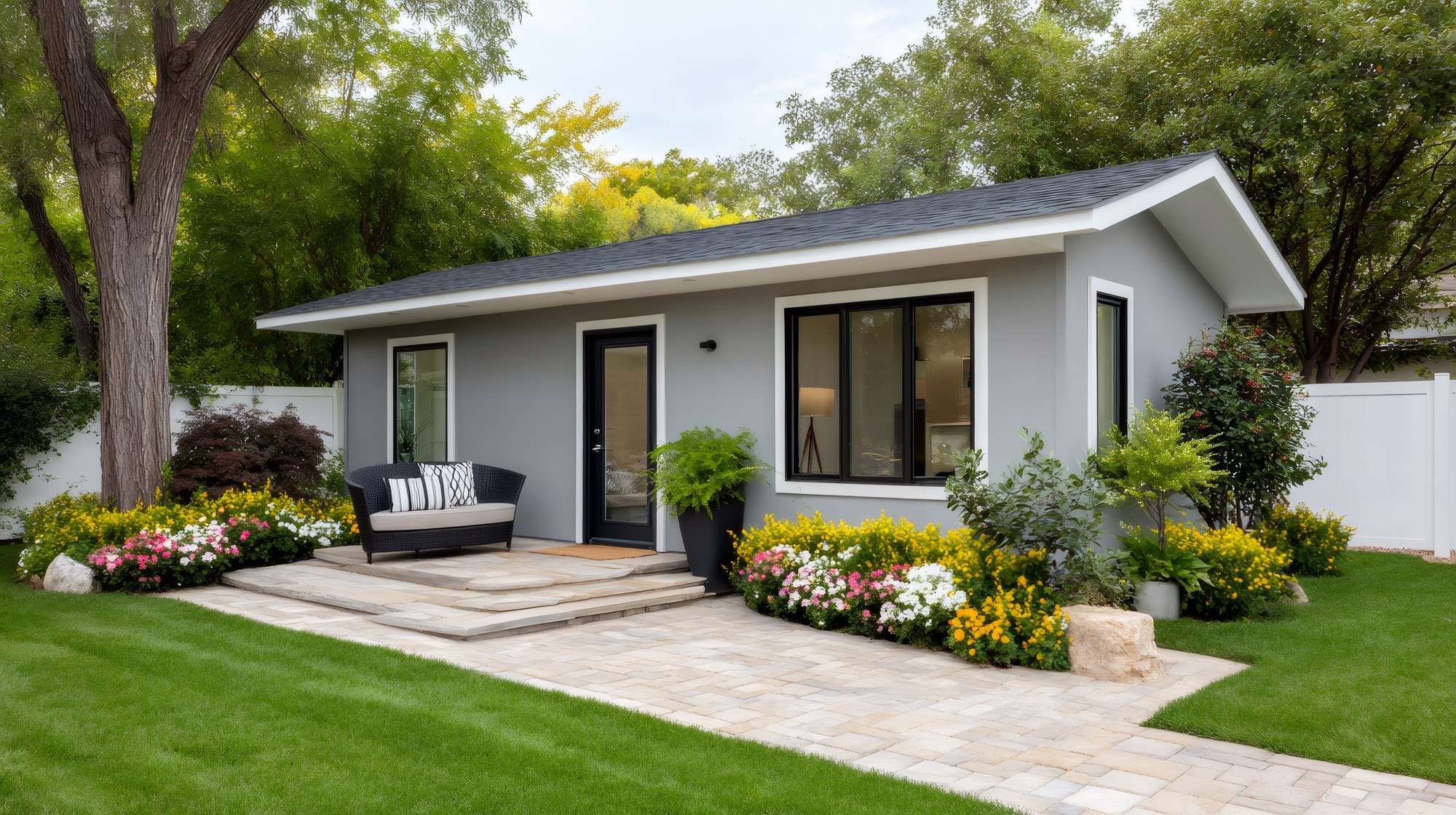
Sarasota & Manatee County's ADU Builder
What is an ADU and can I build one in Sarasota? An ADU, or Accessory Dwelling Unit, is a self-contained residential unit on the same lot as a primary home, with its own entrance, kitchen, and bathroom. Preferred Builders designs and constructs them across Sarasota and Manatee counties, whether detached, attached, or converted from existing space. We handle all the complex local zoning and permitting processes for you and make sure your new unit is fully code-compliant.
Zoning is the hard part. We handle it first.
Florida's ADU rules vary by county and city: setbacks, size limits, and parking requirements all matter before you design anything. As your local ADU builder, we confirm what's allowed on your property first, then design and build the unit around it.
In-Law Suite Builder
Attached units with private entrances for aging parents or adult kids.
Rental-Ready Units
Separate meters and finishes built with long-term tenants in mind.
Garage Conversion Contractor
Converting an existing garage into a legal, code-compliant ADU. See our dedicated garage conversion page for that option specifically.
Detached, attached, or converted: which fits your lot?
Detached ADU (DADU)
A separate structure in the backyard with its own foundation, roof, and utilities. It's the most private option, and the most expensive per square foot since nothing is shared with the main house.
Attached ADU (AADU)
Shares one or more walls with the primary home but has its own private entrance, kitchen, and bathroom, often built as part of an addition.
Internal / Conversion ADU
Created within existing space, most commonly a garage, but sometimes a basement or bonus room. It's usually the fastest and least expensive path to a legal ADU.
ADUs are one of the higher-return projects we build.
An ADU is one of the few home improvements that can pay you back twice: once in day-to-day use, and again in property value or rental income. Here's what the actual published research says, with sources linked so you can read the originals yourself.
“ADUs may have the potential to increase long-term property and re-sale value.”
These figures come from California and Los Angeles markets, where most published ADU research exists, not from Sarasota or Manatee County specifically. We haven't found a comparable published study for our local market, so treat these as directional, not a promise for your property. We also intentionally don't quote a generic "payback period": how fast an ADU pays for itself depends on your achieved rent, financing, and build cost. We're glad to run those numbers with you during a consultation.
What ADUs cost, and why the type matters.
A detached ADU needs its own foundation, roof, and complete utility connections, which is why detached construction typically runs $200–$350 per square foot in our part of Florida, more than a comparable kitchen or bath remodel per square foot. Converting an existing garage or other attached space is usually 40–60% less expensive than building detached, since the shell and some utilities already exist. See our full budgeting guide for ranges across every project type we build.
Florida's ADU rules are changing. Here's what's actually true today.
Under current Florida law (Florida Statute 163.31771), a local government may adopt an ordinance allowing accessory dwelling units in single-family zones, but it isn't required to. Several Florida cities, including Tallahassee, Gainesville, and Tampa, already do. A bill that would make ADU allowance mandatory statewide passed the Florida Senate in February 2026 and is currently awaiting a vote in the Florida House; it is not yet law. We track bills like this as they move and will update this page if and when it changes, but we won't promise you a deadline that hasn't been enacted.
In practice, most ADU projects need a building permit, electrical and plumbing permits, and sometimes a separate permit for utility metering or septic/sewer connection. We confirm exactly what's currently allowed and required on your specific property before design work starts.
From zoning check to move-in.
Zoning Review
We confirm what size and type of ADU your property allows.
Design
Layout, utilities, and finish selections finalized.
Permitting
Full permit package submitted, including any utility separation.
Construction
Foundation through finishes, with weekly progress updates.
Walkthrough
Final inspection sign-off. We stand behind the work.
ADUs: what homeowners ask us.
It depends on your county or city's zoning code: lot size, setbacks, and parking all factor in. Checking this is the first thing we do, before any design work starts.
In most Florida jurisdictions, yes, though some municipalities restrict short-term rentals specifically. We'll flag any restrictions that apply to your property during the zoning review.
Not always required, but recommended if you plan to rent it out. We can design it either way depending on your goals.
Cost varies widely between converting existing space and building detached: detached construction generally runs $200–$350 per square foot in our area, while conversions cost 40–60% less. See our budgeting guide for ranges, or request a consultation for a number specific to your property.
Most ADU projects take 4–8 months from permit approval to move-in, depending on whether it's a garage conversion (faster) or a detached new build (longer, since it needs its own foundation and full utility connections).
A DADU (detached accessory dwelling unit) is a fully separate structure with its own foundation and utilities. An attached ADU (AADU) shares a wall with the primary home but still has its own entrance, kitchen, and bathroom. Attached units are typically less expensive since some site work and utility runs are shared with the main house.
Generally, yes. A 2024 peer-reviewed study of Los Angeles home sales found ADUs raised assessed value and selling price by 7–9%, and a 2025 Federal Housing Finance Agency analysis found California properties with an ADU appreciating faster (9.34% annually from 2013–2023) than those without one (7.65%). Both studies are California-specific, so treat them as directional rather than a Sarasota-area guarantee. A local appraiser or real estate agent can give you a number specific to your neighborhood.
Other ways to add space.
Ready to explore an ADU?
Tell us about your property and we'll schedule a free, no-pressure consultation.