Storm damage recovery, from assessment to final rebuild.
We help Florida homeowners navigate insurance documentation, FEMA's substantial-damage rules, and elevation requirements, and then do the actual rebuilding.
Hurricane damage doesn't wait for insurance approval.
A blue tarp is a common first step after a Florida hurricane: temporary protection while damage is assessed, documented, and approved for repair. The longer a home sits exposed, the more the damage spreads.
Photos: FEMA / U.S. Department of Homeland Security, public domain.
Storm recovery involves two separate systems. We handle both.
After a hurricane, you're usually dealing with your insurance company and, if damage is significant, your local floodplain office enforcing FEMA's 50% "substantial damage" rule. These are different processes with different paperwork. We help you understand which applies to you, gather the documentation each one needs, and manage the rebuild once approvals are in place.
Free Damage Assessment
A documented walkthrough of storm damage, photographed for your records.
Insurance & FEMA Documentation
Repair estimates and documentation formatted for adjusters and floodplain review.
Elevation & Floodplain Compliance
Elevation certificates and flood-vent requirements handled when substantial damage applies.
Strategic Planning for Flood-Zone Remodels
Remodeling in coastal Florida requires knowing the rules before you start. We protect your investment by offering:
Proactive Scope Strategy
We analyze your renovation plans to show you exactly where your project lands against the FEMA 50% threshold before you financially commit.
Code-Compliant Execution
If your remodel triggers floodplain regulations, our experts handle the complex requirements, including structural elevation, proper flood venting, and modern flood-resistant construction.
Local Expertise
We navigate the specific coastal building codes for Sarasota and Manatee counties so you don't have to.
From storm damage to move-back-in day.
Free Assessment
Documented walkthrough and photos within days of your call.
Documentation
Repair estimate prepared for your insurance adjuster and, if needed, your floodplain office.
Compliance Review
We confirm whether substantial-damage or elevation rules apply.
Permitting
Repair or rebuild permits submitted based on that determination.
Rebuild
Mitigation, repair, or full rebuild, with regular progress updates.
We stabilize your property first, to stop further damage before rebuilding starts.
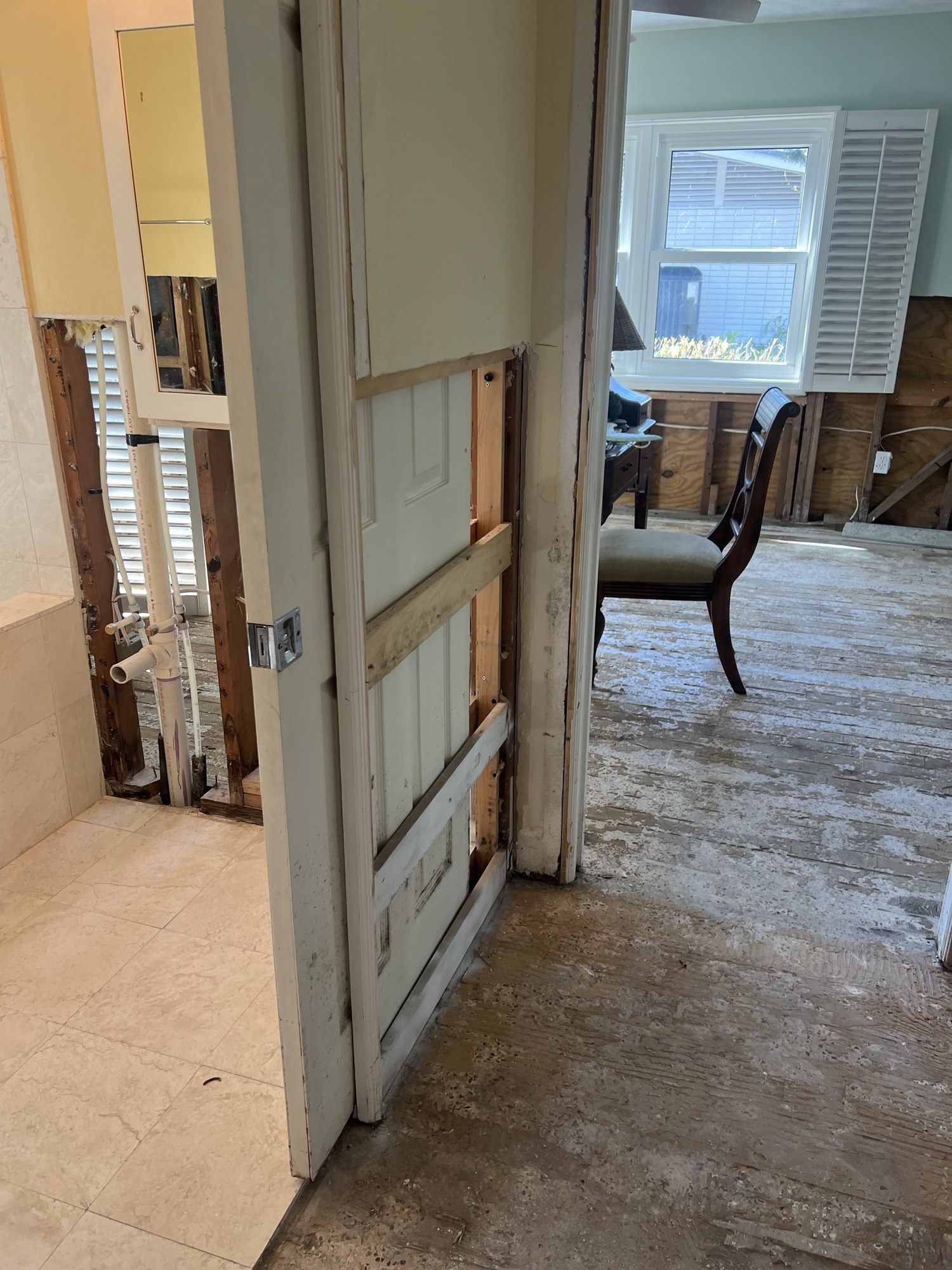
Water intrusion and storm damage keep getting worse every day they're left untreated: mold spreads, wood rots, and a repair can turn into a full rebuild. Before insurance and permitting are even finalized, we cut back damaged drywall to a clean flood-cut line, remove saturated material, and secure the property so it stops deteriorating while the rest of the process catches up.
Storm & FEMA restoration: what homeowners ask us.
No. We're a licensed Florida general contractor. FEMA and your local floodplain administrator make the official determinations and approvals. We help you prepare accurate documentation for that process and handle the construction once it's approved.
Yes. We prepare detailed, itemized repair estimates in the format adjusters expect and can walk the property with them if useful. We're not a public adjuster and don't negotiate your claim on your behalf, but we make sure the contractor-side documentation is solid.
It means the rebuild has to meet current flood-elevation requirements, which can mean elevating the structure or using flood-resistant construction below the base flood elevation. It's a bigger project than a standard repair, and we'll walk you through what that looks like and what it costs before you commit.
We prioritize emergency mitigation (tarping, water extraction, board-up) within days of your call to prevent further damage, even before insurance and permitting are finalized. Full rebuild timing depends on permit approval and material availability.
We can point you to resources for FEMA Individual Assistance and other disaster relief programs, but applying is something you'll do directly with FEMA at disasterassistance.gov. Our documentation focuses on the construction and floodplain-compliance side.
Often part of a storm rebuild.
Storm damage? Let's get it assessed.
Free damage assessment, no obligation. We'll tell you honestly what you're dealing with.